Printer Friendly

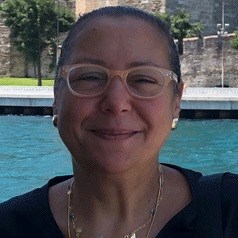
Cathy Spinney started the health-care management master’s degree program at UMass Lowell in a traditional classroom setting. But because her job as a vice president with Yankee Alliance in Andover requires her to travel frequently, getting to class was often challenging.
But thanks to the growth of online and “blended” program offerings at UMass Lowell, that’s no longer such a problem for her and the many other professionals who pursue degrees and certificates here.
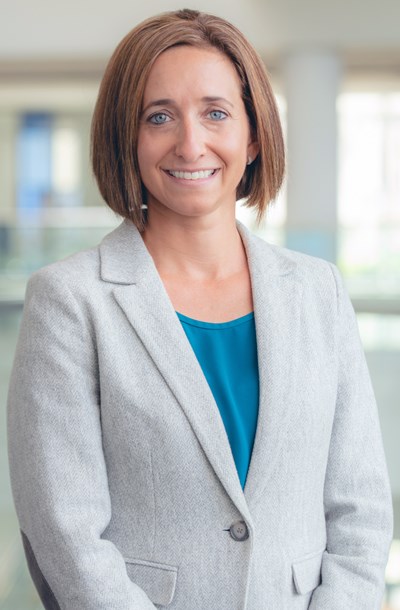
“The Division of Continuing Studies, Distance and Corporate Education has had great success with its online program,” says Catherine Kendrick, executive director of Distance Market Development and Corporate Outreach. “There are, however, different populations that will never take a class totally on campus or are not interested in studying purely online. For those students, the Division has created a new product line, ‘blended learning’ in order to accommodate their preferences for combining both the convenience of online instruction and the interaction that traditional face-to-face instruction has to offer. We see blended programs continuing to grow, especially in the area of graduate programs.”
Health-care management, in which Spinney is pursuing her degree, is one of the areas that has seen tremendous growth in enrollment with the blended program, which requires students to visit campus only a few times a semester, and classes that are offered entirely online.
“For our master’s program, it’s very, very convenient for the students because most are working full time. It’s very difficult for them to come to class every week,” says Beverly Volicer, chair of the Department of Community and Health Sustainability.
Volicer, who has more than two decades of experience teaching in a traditional classroom setting, has transitioned into the world of virtual teaching in recent years. This semester, she’s been teaching quantitative methods for health management, a required course in the health management and policy program that is offered in a blended format, and, in the fall, teaches health data analysis, required for the clinical pathology graduate certificate, offered entirely online through Continuing Studies.
The clinical pathology program has grown dramatically because of the online option.
“The number of students in the program was 20 last year and now it’s about 80,” Volicer says.
She says improvements in technology are making the connection between student and instructor easier to forge online. Volicer started out with software that allowed only a text-based chat with students. Now, she’s able to hold interactive audio discussions. “It’s like a conference call,” she says, where everyone can talk via computer rather than typing questions and responses. Particularly for students who aren’t fast typists, the change is a big improvement.
Volicer says she uses the new program, Wimba, to communicate with students inside and outside class time. On a virtual white board, she can show students examples as she discusses them live. Outside the class environment, students can view a course outline with weekly learning objectives, statistical problems for review as homework, reading assignments and more. There’s also a discussion board on which students can post their questions and Volicer can reply, as well as post links to helpful Web sites. And while there’s a set time for students to “attend” online chats, if they miss one, they are archived on the Web for later review. Some instructors, Volicer said, post videos of their lectures and PowerPoint presentations.
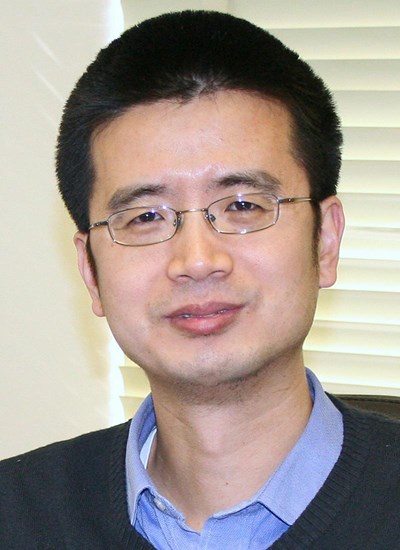
Assoc. Prof. A. James Lee, who teaches in the health management and policy graduate program, reworked the heath-care management and policy program into a blended format using $75,000 from an Alfred P. Sloan Foundation grant. Executive Vice Chancellor Jacqueline Moloney, in her previous role as dean of Continuing Education, was the primary person who secured the grant funds for UMass Lowell.
The result: the program has grown more than 300 percent in a year, Lee says, with more students from outside the immediate Lowell area able to enroll because of the convenience. In-classroom instruction is held a few times a semester on Saturday mornings, so there’s no after-work rush to campus for students. The online portion is offered in the evening, after they’ve had a chance to get home from work, have dinner and relax a bit before they engage in learning.
Spinney began working on her master’s degree when the program was offered only in the classroom. She says that the blended approach has allowed her to finish her degree more quickly than she expected because not having to go to class in person means she can take more courses each semester. She likes the blended approach, she says, because she still gets time in the classroom where she can network with fellow students.
Both Lee and Volicer say they enjoy teaching in the new formats.
“I love it,” Volicer says, adding that she particularly enjoys blended classes because that format enables her to meet the students in person at least a few times during the semester. However, she adds, online-only courses let her to teach students from anywhere in the world – although she has to be mindful that they’re in different time when scheduling online sessions.
One University Avenue . Lowell, MA 01854 . 978-934-4000 - Contact Us
UMASS Lowell's Virtual Campus Directory for Mobility Access
UMassOnline | UMass Club | UMass System